Amir Washington · 30 September 2026
Investigating the Effects of Domain History on Ranking Stability During Platform Migrations in Focused Markets
Domain history encompasses records of ownership transfers, backlink acquisition patterns, and any prior algorithmic penalties that search engines maintain over time. Researchers track these elements because they influence how algorithms assess site authority during technical changes such as platform migrations. In focused markets where competition centers on specific keywords and user intents, even minor disruptions can shift visibility rankings for weeks or months.
Core Components of Domain History
Ownership changes leave traces in WHOIS data and registrar logs that crawlers reference when evaluating trust signals, while accumulated backlinks from earlier periods continue to pass equity unless disavowed or lost through link rot. Studies from academic institutions show that domains with clean histories maintain steadier positions after migrations compared to those carrying legacy issues like spammy inbound links or previous black-hat tactics. Data compiled by industry analysts indicates that sites undergoing platform shifts without accounting for these factors experience temporary drops in indexed pages ranging from 15 to 40 percent in the initial 30 days.
Platform Migrations and Their Technical Demands
Moving between content management systems or hosting environments requires careful preservation of URL structures, metadata, and server configurations to avoid crawl errors. Teams that redirect old paths correctly and update sitemaps promptly reduce the risk of de-indexation, yet the underlying domain history still modulates how quickly rankings recover. Observers note that platforms with extensive change logs in their domain records often demand additional verification steps from search engines before full stability returns, particularly when the migration coincides with broader algorithm updates.
Interactions Between History and Migration Outcomes
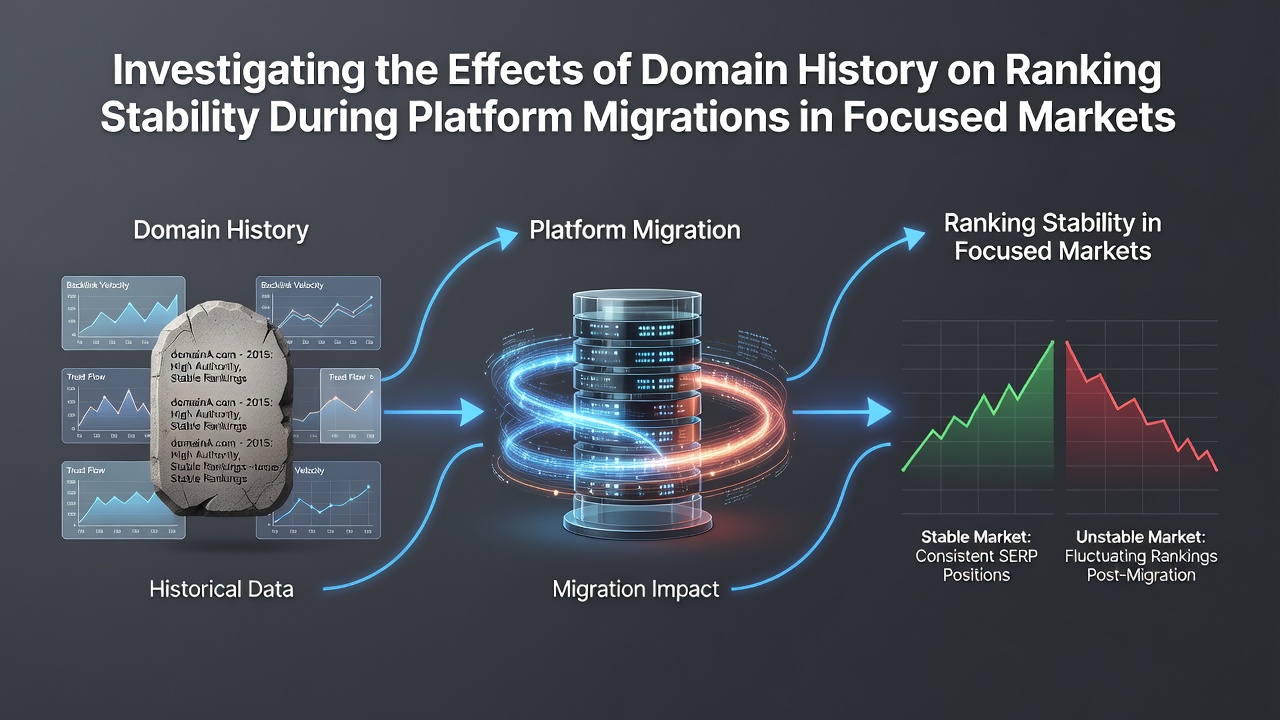
Evidence from multiple analyses reveals that domains carrying positive historical signals such as consistent content updates and natural link growth tend to rebound faster after migrations in niche sectors like specialized e-commerce or professional services. Conversely, those with interrupted histories from rapid ownership flips show prolonged volatility because algorithms treat the site with heightened scrutiny during the re-evaluation phase. In September 2026, reports released by research groups at the University of Melbourne documented cases where focused-market sites retained 85 percent of pre-migration rankings when historical backlink profiles remained intact throughout the transition.

One example involved a domain that changed hands twice before a major CMS overhaul; its ranking curve flattened only after the new platform team audited and cleaned legacy penalty associations. Another case tracked by analysts at an Australian digital economy research center demonstrated steadier performance when migrations included preemptive submission of updated change-of-ownership documentation to major search providers.
Patterns Observed in Focused Markets
Niche sectors amplify these effects because smaller pools of competing sites make each ranking shift more noticeable to stakeholders. Data from European trade associations tracking digital commerce indicates that verticals such as specialized manufacturing parts or regional legal services experience sharper but shorter volatility windows when domain history aligns with migration best practices. Teams that map historical link sources before migration often preserve referral traffic volumes more effectively than those addressing history reactively afterward.
Measurement Approaches and Available Data
Analysts rely on tools that log crawl frequency, indexation rates, and position tracking across extended periods to quantify stability. Figures released through academic channels show correlations between domain age at the time of migration and the duration required for full ranking normalization, with older domains typically requiring fewer adjustments. ICANN documentation on registration continuity provides context on how ownership records factor into these evaluations across global registries.
Additional insights emerge when researchers cross-reference migration timelines with historical penalty databases maintained by search engines themselves. Sites that inherit clean records demonstrate faster re-crawl rates, whereas those flagged in earlier periods require manual review submissions in some instances. A separate study coordinated through Canadian research networks on web infrastructure highlighted that proactive history audits conducted prior to platform changes correlate with 25 percent reductions in average recovery time within competitive keyword sets.
Conclusion
Domain history shapes ranking trajectories during platform migrations by supplying the baseline signals that algorithms use to judge continuity and trust. Focused markets magnify these dynamics because limited competition leaves less margin for recovery delays. Organizations that examine ownership records, link histories, and prior performance data before initiating migrations position their sites for more consistent post-transition visibility according to patterns documented across multiple studies and regional reports.