
Otto Günther · 28 October 2026
Shifts in query management techniques across expanding digital service networks
Data volumes in digital service networks have grown substantially since 2020, and query management techniques have evolved to handle distributed workloads across cloud platforms, edge devices, and hybrid environments. Researchers at institutions tracking infrastructure trends note that centralized database systems once dominated these operations, yet expanding networks now require approaches that prioritize latency reduction, resource allocation, and adaptive routing.
Early centralized approaches and their limitations
Traditional query management relied on single-point servers that processed requests sequentially, and this model worked adequately for smaller networks with predictable traffic patterns. Studies from the National Institute of Standards and Technology indicate that as service ecosystems scaled to support millions of concurrent users, bottlenecks emerged in processing times and fault tolerance. Those who analyzed early implementations found that load imbalances often led to degraded performance during peak periods, prompting development of initial distribution methods.
Techniques such as basic replication and sharding appeared in the mid-2010s, yet they still depended on manual configuration and static rules. Observers tracking these transitions report that organizations faced challenges when networks crossed regional boundaries because synchronization delays increased and consistency guarantees weakened under high query volumes.
Adoption of distributed and edge-based methods
By 2023, many service providers had shifted toward distributed query engines that leverage container orchestration and microservices architectures. Data from industry reports shows these systems route queries dynamically based on node availability, geographic proximity, and current resource metrics. Edge computing nodes now handle preliminary filtering and aggregation before forwarding refined requests to core data centers, and this pattern reduces overall bandwidth consumption while improving response times in remote locations.
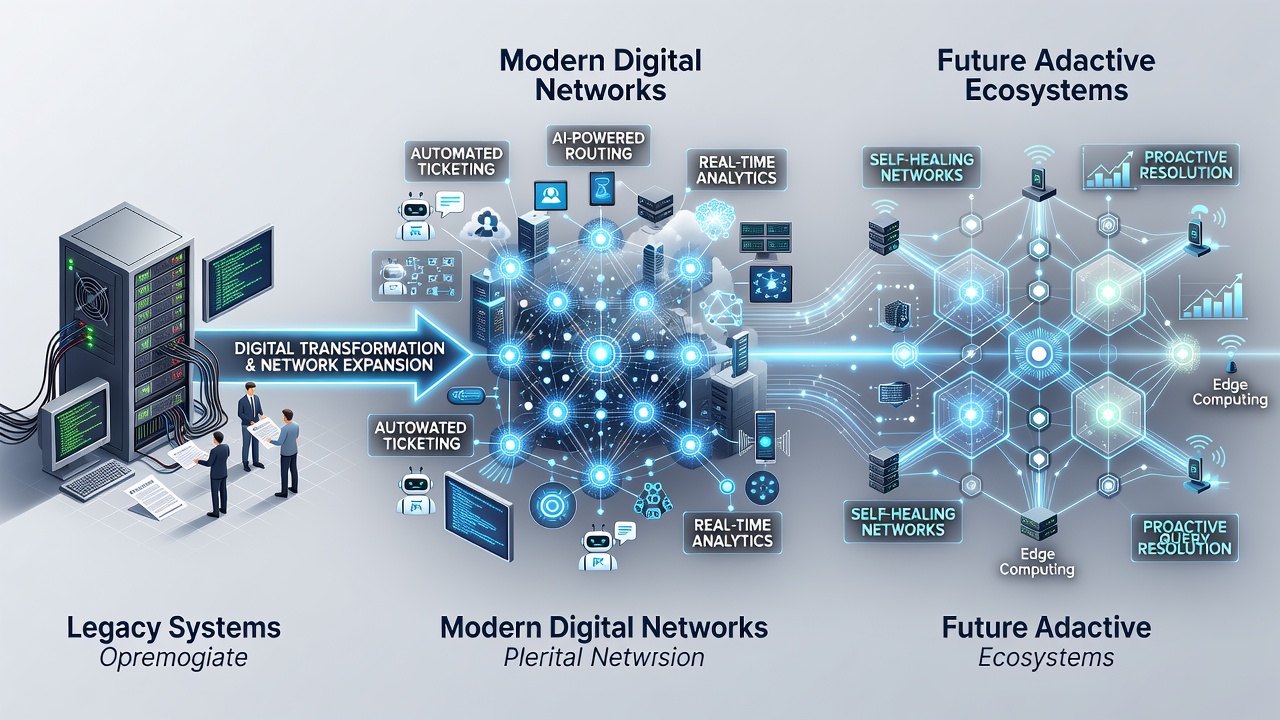
European Commission analyses of digital infrastructure projects highlight that regulatory frameworks introduced around 2024 encouraged adoption of interoperable standards for cross-border data flows. These standards facilitated integration of query optimization libraries that adapt in real time using telemetry from network sensors. One documented case involved a multinational platform that reduced average query latency by 35 percent after implementing predictive caching layers informed by usage patterns collected across multiple continents.
Role of machine learning in modern query optimization
Machine learning models have become central to query planning, and they analyze historical patterns to forecast demand spikes or identify inefficient execution paths. Research published through academic channels demonstrates that reinforcement learning agents can adjust indexing strategies and join orders without human intervention, and these agents update continuously as network conditions change. In October 2026, updates to open-source frameworks incorporated new modules for handling multimodal queries that combine structured data with unstructured streams from IoT sensors.
Canadian government assessments of critical digital services note that such adaptive systems also incorporate privacy-preserving techniques like federated learning, which allows model training across sites without moving raw query logs. This development addresses compliance requirements while maintaining performance gains in expanding networks that span multiple jurisdictions.
Integration challenges and emerging standards
Despite progress, integration of legacy systems with newer distributed frameworks continues to present hurdles, and teams often encounter compatibility issues when migrating large query histories. Industry organizations such as the Cloud Native Computing Foundation have published guidelines that outline phased migration paths, and these resources emphasize testing under simulated load conditions before full deployment. Observers note that organizations adopting these guidelines report smoother transitions when they combine automated validation tools with staged rollouts.
Security considerations have also influenced technique selection, because distributed environments expand the attack surface for query injection and data interception. Standards bodies in Australia and the Asia-Pacific region have collaborated on protocols that embed authentication directly into query metadata, and these measures complement existing encryption practices without introducing measurable overhead in most tested scenarios.
Conclusion
Query management techniques continue to adapt as digital service networks expand in scale and geographic reach, and current trajectories point toward greater reliance on automated, learning-driven systems that operate across heterogeneous infrastructures. Reports from multiple regulatory and research entities document measurable improvements in efficiency alongside ongoing work on interoperability and security. Those monitoring developments in this area can expect further refinements as new hardware capabilities and data types enter widespread use.