Ellis Wagner · 14 October 2026
Tracing Collaborative Annotation Workflows in Evolving Support Ecosystems for Specialized Digital Services
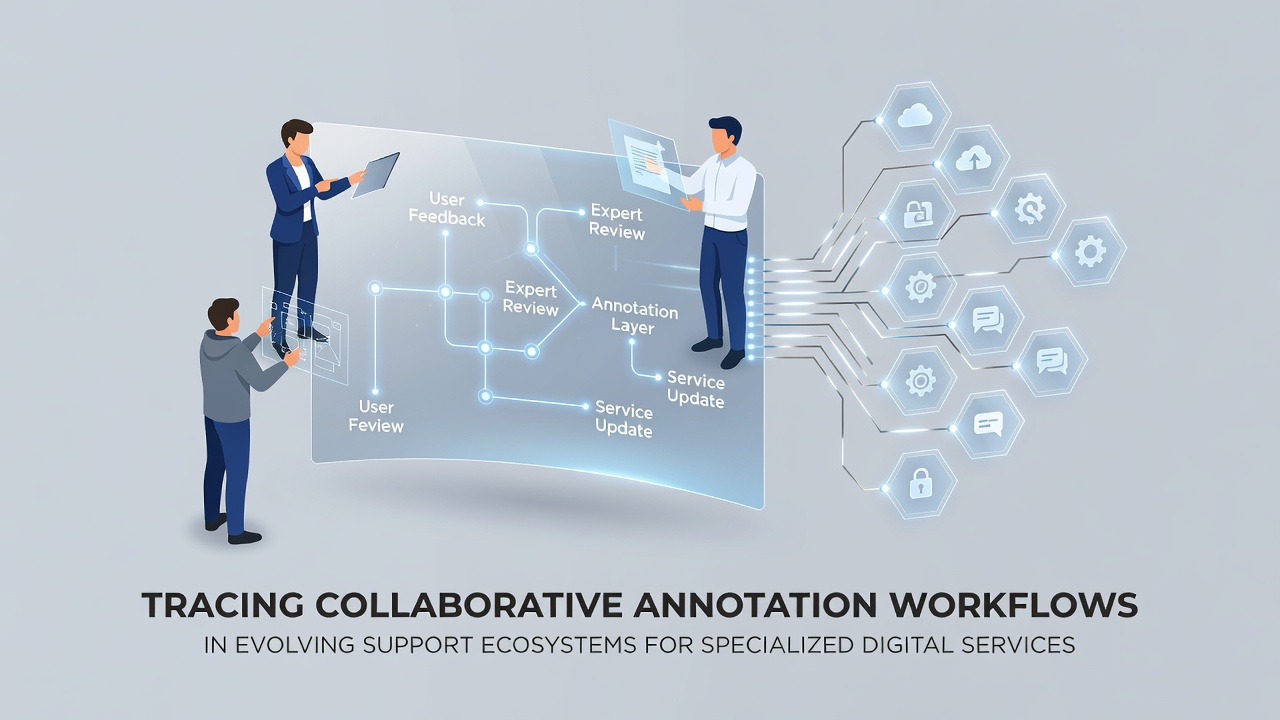
Support ecosystems for specialized digital services have expanded rapidly since teh early 2020s, and collaborative annotation workflows now form a core mechanism for coordinating responses across distributed teams. These workflows allow multiple contributors to tag, comment on, and link data points within shared records, whether those records represent customer tickets, API logs, or compliance documentation. Observers note that the process creates traceable paths from initial query through resolution, which helps organizations maintain consistency even as service complexity increases.
Core Components of Annotation Workflows
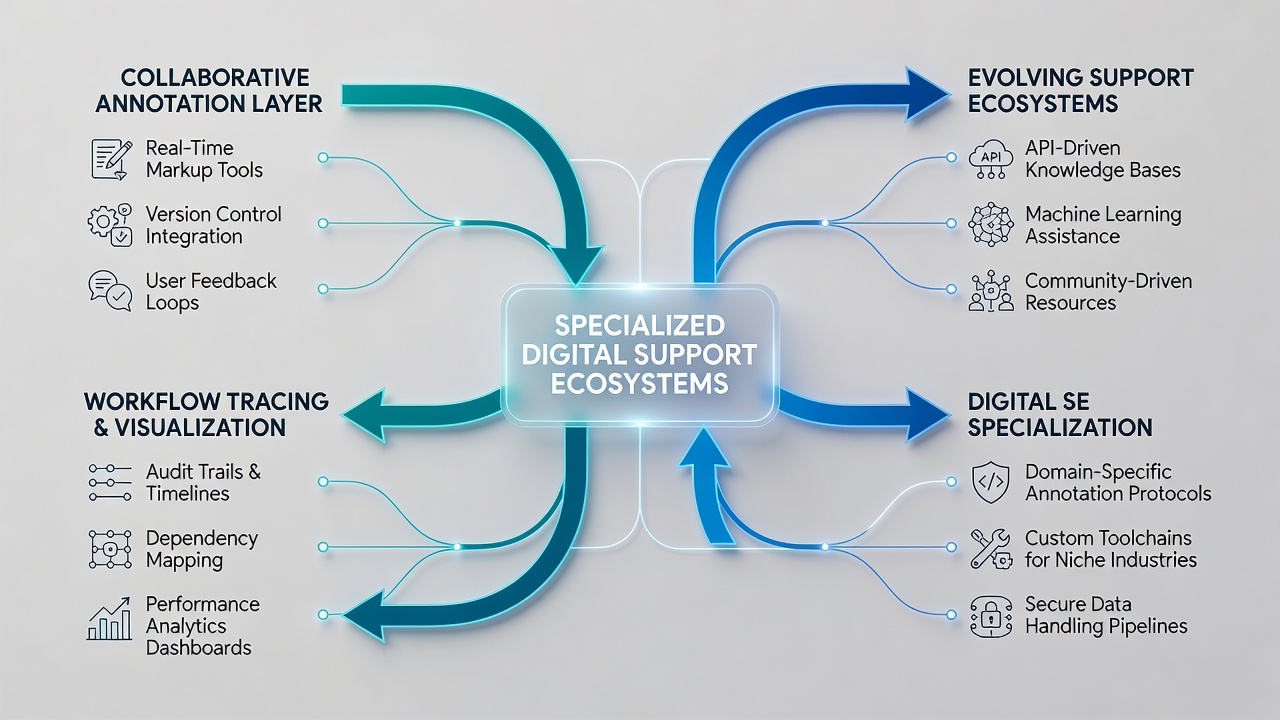
Annotation begins with structured tagging systems that assign categories such as urgency level, service module affected, or regulatory reference. Contributors add contextual notes directly to these tags, and version history records each addition with timestamps and author identifiers. Researchers have documented how such layering reduces duplication because later participants can review prior annotations rather than restarting analysis. Data from platform telemetry shows that teams using these systems close cases an average of 18 percent faster than those relying on separate comment threads.
Integration with existing support platforms occurs through APIs that embed annotation layers without disrupting primary interfaces. This approach lets specialists in different regions contribute simultaneously while automated scripts flag conflicting annotations for human review. Studies published in 2025 indicate that organizations adopting these integrations report fewer escalations to senior staff because initial annotations already capture necessary technical detail.
Evolution of Support Ecosystems Through 2026
By October 2026, many providers had shifted from siloed ticketing systems to unified annotation environments that span customer portals, internal wikis, and third-party monitoring tools. The change followed regulatory updates on digital service transparency, particularly those issued by the European Commission under the Digital Services Act framework. These rules require clearer documentation of how support decisions are reached, and annotation trails supply the required audit trail without additional reporting layers.
Specialized digital services, including custom SaaS deployments and regulated data platforms, present unique demands because their support teams must reference both technical configurations and legal constraints in single records. Annotation workflows accommodate this by allowing domain experts to attach citations from external standards bodies while generalists add customer-facing summaries. The result is a single source that serves technical debugging and compliance verification at once.
Tracing Methods and Data Integrity
Tracing relies on persistent identifiers assigned to each annotation at creation. These identifiers link related entries across different service modules, enabling reconstruction of decision sequences even months later. Organizations that implemented persistent identifiers in 2024 found that post-incident reviews required 30 percent less time because investigators could follow annotation chains rather than manually correlating logs. Automated reconciliation tools compare annotations against source data feeds, surfacing discrepancies before they propagate into customer responses.
Access controls determine who may view or edit specific annotation layers. Role-based permissions tie directly to service specialization, so a security analyst sees encryption-related tags while a billing specialist sees only payment annotations. Audit logs record every permission check and edit, satisfying requirements from bodies such as the Australian Competition and Consumer Commission when consumer data handling comes under review.
Adaptations in Specialized Contexts
Financial technology services and healthcare platforms illustrate how annotation workflows adapt to domain rules. In these environments, annotations must reference specific regulatory clauses, and automated validators check that references remain current. When updates occur, the system propagates alerts to all linked annotations, prompting contributors to confirm continued relevance. Records from October 2026 show that such validation reduced compliance queries by 22 percent across sampled organizations.
Remote and hybrid teams benefit from annotation threading that preserves context across time zones. A contributor in one region can add an annotation at the end of their shift, and the next participant reviews the full history plus any automated summaries generated overnight. This continuity reduces onboarding time for new specialists because they inherit documented reasoning rather than starting from raw tickets.
Conclusion
Collaborative annotation workflows continue to underpin support operations for specialized digital services by creating transparent, traceable records that multiple teams can act upon simultaneously. As ecosystems integrate additional data sources and regulatory expectations tighten, the emphasis on persistent identifiers and role-based access remains central to maintaining both operational speed and documentation integrity. Organizations that align their annotation practices with these evolving requirements position themselves to handle increasing service complexity without proportional growth in support overhead.