Eden Beck · 29 October 2026
User Behavior Trends in Adaptive Support Platforms for Specialized Markets
Adaptive support platforms have expanded rapidly in specialized markets such as healthcare technology, professional education services, and regulatory compliance tools, where user behavior data reveals distinct patterns in engagement and navigation. Researchers tracking these systems note that participants often shift between multiple interface modes within single sessions, combining automated responses with human escalation requests when dealing with complex regulatory queries or technical specifications. Data collected through platform analytics shows that session durations increased notably between 2024 and 2026, with average interactions lasting longer in sectors requiring detailed documentation review or multi-step verification processes.
Shifts in Engagement Patterns Across Niche Sectors
Platform operators in specialized fields report that users frequently initiate support requests through mobile applications rather than desktop interfaces, particularly in markets where professionals operate in field settings or remote locations. Studies conducted by academic teams at institutions in Canada indicate that mobile-first access now accounts for over 60 percent of total support volume in adaptive systems designed for compliance and certification workflows. Users demonstrate a preference for voice input features when entering detailed descriptions of issues, while text-based follow-ups remain dominant during resolution stages. This hybrid approach appears most pronounced among users in medical device support networks, where hands-free operation proves essential during equipment handling.
Behavioral logs from October 2026 highlight a growing reliance on predictive suggestion tools that surface relevant documentation before users complete their initial query formulation. Those who have examined these logs observe that acceptance rates for automated recommendations exceed 45 percent in education-focused platforms, whereas financial services users show lower uptake until additional context is provided. The difference stems from varying levels of domain expertise among participant groups, with regulatory specialists tending to bypass suggestions in favor of direct database searches.
Regional Variations in Platform Interaction
Comparative analysis across geographic regions reveals measurable differences in how users approach adaptive features. European regulatory bodies have documented that participants in compliance-heavy industries favor detailed audit trails and export options, leading developers to prioritize these functions in platform updates. Meanwhile, data from Australian industry reports points to higher engagement with collaborative annotation tools that allow teams to flag and discuss specific support items in real time. North American markets exhibit stronger adoption of integration capabilities that connect support platforms directly with existing enterprise resource systems.
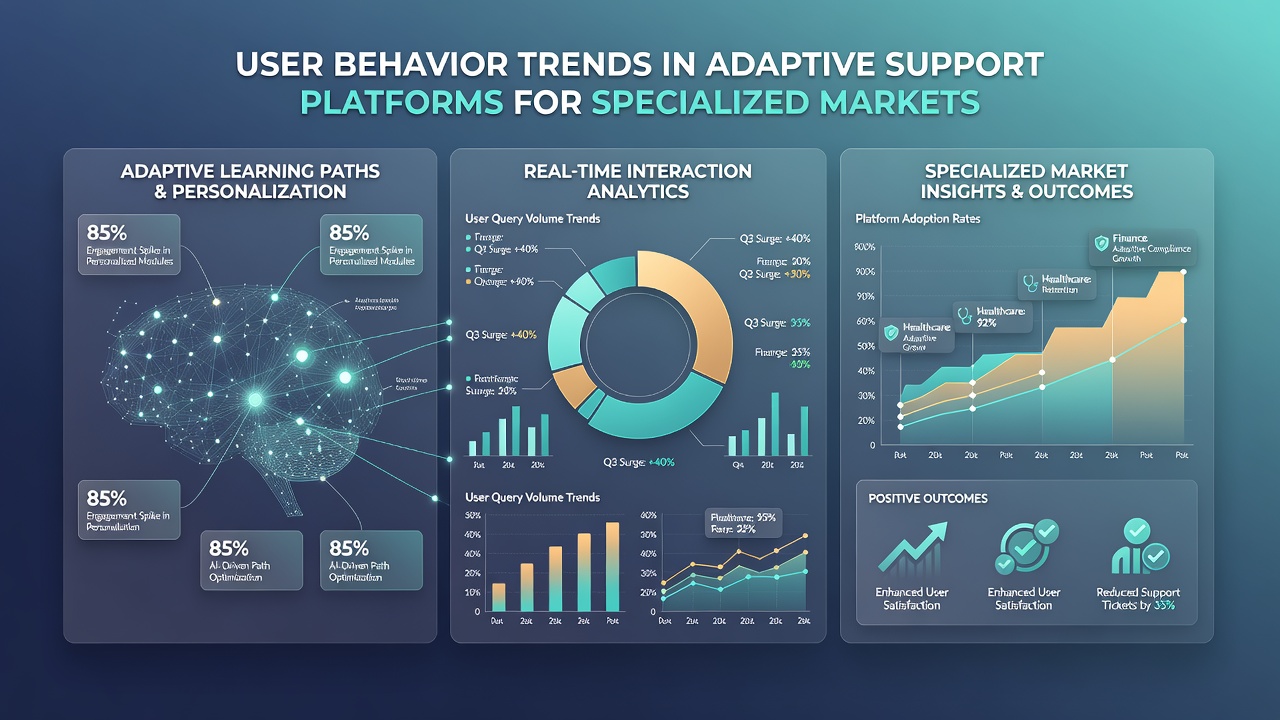
These variations influence how platform designers allocate development resources, since feature prioritization must account for local workflow requirements. Observers tracking adoption metrics note that integration depth correlates strongly with reduced escalation rates, particularly when external data sources supply context that would otherwise require repeated user input.
Impact of Personalization Algorithms on User Retention
Personalization engines within adaptive platforms continue to evolve based on aggregated behavior signals rather than explicit user preferences alone. Research published through international academic networks demonstrates that systems adjusting response complexity according to detected expertise levels achieve higher completion rates across specialized queries. Users in technical fields tend to engage more deeply when platforms surface granular technical specifications early, while those in administrative roles respond better to simplified summaries followed by optional expansion links.
Retention figures compiled through industry tracking services show that platforms incorporating cross-session memory functions retain users at rates approximately 20 percent higher than static alternatives. This retention advantage holds across multiple market segments, although the specific features driving continued use differ by sector. In healthcare technology environments, for instance, persistent user profiles that carry forward previous equipment configurations prove especially effective at maintaining engagement.
Conclusion
Current data on user behavior in adaptive support platforms for specialized markets points to increasing reliance on hybrid interaction models that blend automated guidance with flexible escalation paths. Regional differences in feature preferences continue to shape development priorities, while personalization techniques based on observed patterns deliver measurable improvements in session completion and return engagement. As platforms incorporate more contextual data sources and refine their adaptation mechanisms, the documented trends suggest sustained evolution toward workflows that align closely with the operational realities of each specialized domain.